
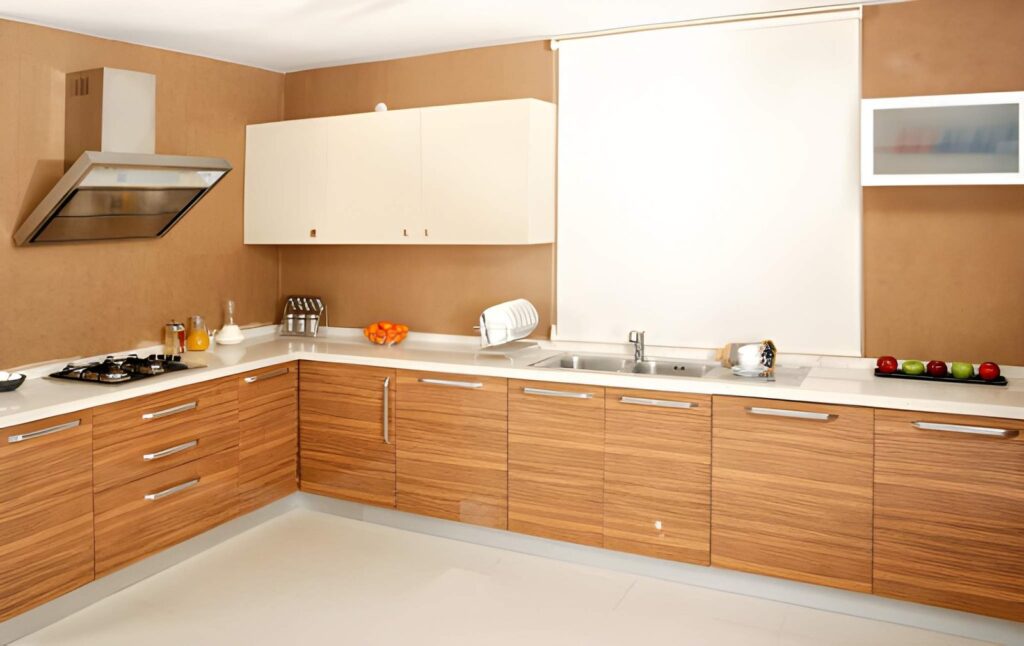
If you’re renovating your kitchen, you’ve likely come across wood plastic composite as an alternative to solid wood cabinetry. Both materials have loyal fans, but they perform very differently in real Montreal homes, where humidity, temperature swings, and daily wear all take a toll. This guide breaks down how each material holds up, so you can choose with confidence.
What Is Wood Plastic Composite?
Wood plastic composite, often shortened to WPC, is a plastic composite material made by combining wood fibres with recycled plastic. As a result, it captures some of wood’s natural look while gaining plastic’s resistance to moisture and warping.
Manufacturers use WPC in decking, flooring, and increasingly in kitchen cabinetry, since it holds up well in humid environments without the swelling or cracking that solid wood can experience over time.
What Is Solid Wood, and Why Has It Lasted So Long?
Solid wood has been the standard choice for cabinetry for generations. Species like oak, maple, and birch offer natural grain patterns, warmth, and a premium feel that’s hard to replicate synthetically.
However, solid wood is also more sensitive to environmental changes. In addition, it typically costs more and requires more careful upkeep than composite alternatives, which is where the wood vs WPC comparison really matters.
Wood vs WPC: Durability Compared
Durability is often the deciding factor for busy households. Here’s how the two materials compare directly.
Moisture Resistance
WPC handles moisture significantly better than solid wood. Since it contains plastic, it resists swelling, warping, and water damage near sinks and dishwashers. Solid wood, by contrast, can absorb moisture over time, especially in Montreal’s humid summers.
Temperature Sensitivity
Montreal’s seasonal shifts, from humid summers to dry winters, can cause solid wood to expand and contract. WPC remains more stable across these temperature changes, which reduces the risk of cracking or warping over the years.
Impact Resistance
Solid wood can dent or scratch more easily under heavy daily use. WPC tends to resist minor impacts better, making it a practical choice for high-traffic kitchens, particularly in busy family homes.
Long-Term Structural Stability
Over many years, solid wood cabinets, when properly maintained, can outlast composite options and even improve in appearance as the wood ages. WPC, however, maintains consistent performance with far less risk of structural issues like warping.
Wood vs WPC: Maintenance Requirements
Maintenance needs differ significantly between these two kitchen materials.
Solid wood cabinets need:
- Regular cleaning with wood-safe products
- Occasional resealing or refinishing
- Careful moisture control near sinks and appliances
- Periodic touch-ups for scratches or dents
WPC cabinets need:
- Simple wipe-down cleaning
- No sealing or refinishing required
- Minimal risk of moisture damage
- Occasional checks for surface wear on lower-quality finishes
For homeowners who want a lower-maintenance kitchen, WPC clearly has the edge. However, if you enjoy the character that comes with aging wood and don’t mind the extra care, solid wood remains a rewarding choice.
Appearance and Design Flexibility
Solid wood offers natural grain variation, which means no two cabinets look exactly alike. This uniqueness appeals to homeowners who want a warm, organic feel in their kitchen.
WPC, on the other hand, offers more consistency and design flexibility. Manufacturers can produce it in various colors, finishes, and textures, including wood-look patterns that mimic natural grain closely enough for most buyers to appreciate the difference only up close.
Cost Comparison: WPC vs Solid Wood
Generally speaking, WPC costs less than solid wood, since it uses recycled materials and requires less intensive manufacturing. Solid wood, especially premium species like walnut or cherry, commands a higher price due to sourcing and craftsmanship.
That said, total cost also depends on long-term maintenance. Solid wood’s upkeep costs, such as resealing every few years, can add up over time, which narrows the price gap between the two materials.
Which Kitchen Materials Work Best for Montreal Homes?
When choosing between these two kitchen materials, consider your household’s specific needs.
Choose wood plastic composite if you:
- Want low-maintenance cabinets
- Live in a humid or moisture-prone space
- Prefer a consistent, modern appearance
- Have a busy household with heavy daily use
Choose solid wood if you:
- Value natural grain and authentic materials
- Don’t mind occasional maintenance
- Want cabinets that can be refinished over decades
- Are drawn to a traditional or heritage kitchen style
For a broader look at cabinet styles and layouts, visit our kitchen cabinets guide to see how material choice fits into your overall renovation plan.
How to Decide: A Simple Step-by-Step Approach
Step 1: Assess your kitchen’s moisture exposure. Homes with poor ventilation or frequent humidity benefit more from WPC.
Step 2: Consider your maintenance tolerance. If you don’t want to reseal cabinets every few years, WPC is the easier long-term choice.
Step 3: Set your budget. Factor in both upfront cost and long-term upkeep, not just the initial price tag.
Step 4: Think about resale value. Solid wood often appeals more to buyers seeking a traditional, high-end finish, which may matter if you plan to sell.
Step 5: Consult a professional. A local expert can assess your specific kitchen conditions and recommend the best material for your space.
Final Thoughts
Choosing between wood plastic composite and solid wood comes down to how you weigh durability, maintenance, and appearance for your specific Montreal home. If low upkeep and moisture resistance matter most, WPC is likely the better fit. If you value natural character and don’t mind extra care, solid wood remains a timeless choice.
Still unsure which material suits your kitchen? Get in touch with our team for personalized guidance based on your space and budget.
Frequently Asked Questions
- Is wood plastic composite as strong as solid wood?
In terms of moisture and impact resistance, WPC often outperforms solid wood. However, solid wood can offer greater long-term structural character when properly maintained and refinished over time.
- Does WPC look cheap compared to real wood?
Not necessarily. Modern WPC finishes can closely mimic natural wood grain, and many homeowners find the difference hard to spot once cabinets are installed.
- Which material is better for Montreal’s climate specifically?
WPC generally performs better in Montreal’s humid summers and dry winters, since it resists the expansion and contraction that solid wood can experience with seasonal changes.
- Is WPC more environmentally friendly than solid wood?
It can be, since WPC often incorporates recycled plastic. However, sustainably sourced solid wood is also an environmentally responsible option, so it depends on the specific products you choose.
- Can I mix WPC and solid wood cabinets in the same kitchen?
Yes. Many homeowners combine both, using WPC in moisture-prone areas like under the sink and solid wood elsewhere for a balanced look and performance.
